

International trade looks simple from the outside. You buy goods from one country, ship them to another, and sell them for profit. In reality, importing is a highly regulated process that involves customs rules, taxes, documentation, and classification systems that determine how much you pay and whether your goods can even enter a country.
Two of the most important concepts every importer must understand are HS Codes and tariffs. These two elements directly affect pricing, profitability, compliance, and even delivery timelines. Many import businesses fail not because of poor sales, but because they misunderstand import classification and cost structures.
In structured business environments, where financial accuracy is essential and companies rely on professional support such as an accounting service, understanding import costs becomes even more important. Proper classification and tariff planning directly affect financial reporting, tax obligations, and profit margins.
This guide explains HS Codes and tariffs in a simple, practical way so importers can avoid costly mistakes and build more profitable global businesses.
Understanding What HS Codes Are
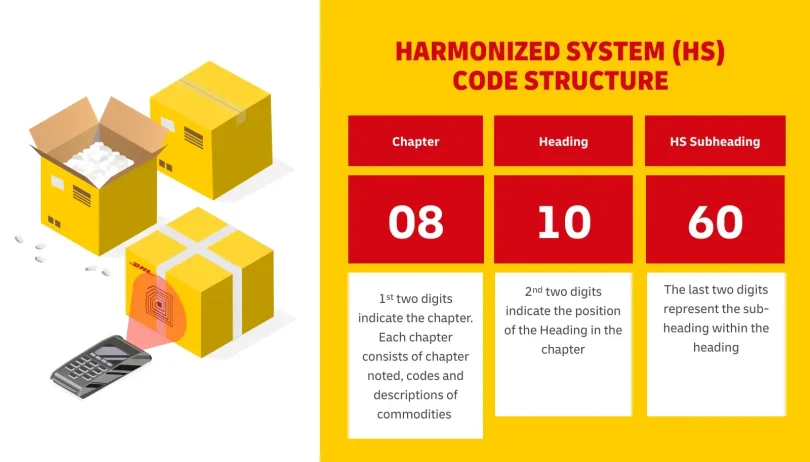
HS Codes, or Harmonized System Codes, are internationally standardized numerical codes used to classify traded products. Every product imported or exported is assigned a specific code that determines how customs authorities identify it.
These codes are used by almost every country in the world. They ensure consistency in global trade classification and help governments apply the correct duties and regulations.
An HS Code typically consists of multiple digits that break down a product into categories, subcategories, and specific descriptions.
For example, different types of clothing, electronics, machinery, and food products all have unique HS Codes.
Without correct classification, importers risk delays, fines, or incorrect tax charges.
Why HS Codes Are So Important for Importers
HS Codes are not just administrative details. They directly impact the cost and legality of importing goods.
Customs authorities use HS Codes to determine import duties, taxes, and regulatory requirements.
If a product is classified incorrectly, it may be taxed at the wrong rate or flagged for inspection.
This can lead to delays, penalties, or even confiscation of goods.
Correct classification ensures smooth customs clearance and accurate cost calculation.
It also helps importers avoid legal issues and maintain compliance with international trade laws.
Understanding Tariffs in International Trade
Tariffs are taxes imposed by governments on imported goods.
They are usually calculated as a percentage of the product’s value or based on quantity.
Tariffs serve multiple purposes. They generate government revenue, protect local industries, and regulate trade flows.
For importers, tariffs represent a direct cost that affects pricing and profit margins.
The higher the tariff, the more expensive it becomes to import a product.
Understanding tariffs is essential for accurate financial planning and competitive pricing.
How HS Codes and Tariffs Work Together
HS Codes and tariffs are closely connected.
Once a product is classified using an HS Code, that code determines the tariff rate applied to the product.
In other words, the HS Code is the identity of the product, and the tariff is the tax assigned to that identity.
Different HS Codes may have different tariff rates even for similar products.
This means small classification differences can have a significant financial impact.
Accurate classification is therefore essential for cost control and profitability.
The Financial Impact of Incorrect Classification
Incorrect HS Code classification can be extremely costly for importers.
If a product is misclassified, it may be charged a higher tariff than necessary.
It can also lead to underpayment, which may result in fines and audits.
In some cases, customs authorities may delay shipments until correct classification is confirmed.
These delays can disrupt supply chains and increase storage costs.
This is why accurate product classification is a critical part of import operations.
Role of Tariff Rates in Pricing Strategy
Tariff rates directly affect how importers set their selling prices.
If tariffs are high, the final product cost increases, which must be reflected in retail pricing.
If tariffs are low, businesses can maintain competitive pricing and higher margins.
Importers must calculate total landed cost, which includes product cost, shipping, insurance, and tariffs.
This helps ensure that pricing strategies remain profitable.
Without considering tariffs, businesses risk selling at a loss without realizing it.
Common Challenges Importers Face With HS Codes
One of the biggest challenges is complexity.
HS classification systems can be detailed and difficult to interpret.
Similar products may fall under different codes depending on materials, usage, or specifications.
Another challenge is inconsistency between countries.
While the HS system is global, individual countries may apply different interpretations or additional digits.
This creates confusion for importers operating in multiple markets.
Staying updated with customs regulations is essential for avoiding mistakes.
The Role of Customs Authorities
Customs authorities are responsible for enforcing HS Code classification and tariff collection.
They inspect shipments, verify documentation, and ensure compliance with trade laws.
If discrepancies are found, they can reclassify goods and adjust tariff charges.
Importers must therefore ensure that documentation is accurate and consistent.
Proper communication with customs authorities reduces the risk of delays and penalties.
Why Businesses Rely on Professional Support
Because HS classification and tariff management can be complex, many businesses rely on professional support.
Importers often work with logistics experts, customs brokers, and financial professionals to ensure compliance.
Accurate financial tracking is also essential, which is why many companies use an accounting service to manage import costs, tax obligations, and profit calculations.
This helps businesses maintain accurate records and avoid financial misstatements.
Professional support becomes especially important for companies handling large-scale international trade.
How to Find the Correct HS Code
Finding the correct HS Code requires understanding the product in detail.
You must consider materials, function, usage, and industry classification.
Customs databases and international trade tools are often used to identify correct codes.
However, even with tools, interpretation can vary.
This is why many importers verify classifications with customs brokers or trade consultants.
Accuracy at this stage is essential to avoid future problems.
Tariff Reduction Strategies for Importers
Importers often look for legal ways to reduce tariff costs.
One common strategy is sourcing from countries with trade agreements that reduce or eliminate tariffs.
Another approach is product reclassification where legally appropriate.
Some businesses also restructure supply chains to optimize cost efficiency.
However, all strategies must comply with customs regulations.
Non-compliance can result in severe penalties.
HS Codes and Global Trade Agreements
International trade agreements often rely on HS Codes to define tariff reductions.
Free trade agreements between countries may offer reduced or zero tariffs for specific HS Code categories.
This makes understanding classification even more important for importers.
Businesses that strategically align sourcing with trade agreements can significantly reduce costs.
This improves competitiveness and profit margins in global markets.
The Role of Accounting in Import Operations
Importing is not just a logistics function. It is also a financial operation.
Every tariff, duty, and shipping cost must be recorded accurately for financial reporting.
Mistakes in classification or tariff calculation can distort profit margins.
This is why many businesses rely on an accounting service to track import expenses, calculate landed costs, and ensure compliance with tax regulations.
Proper accounting ensures that import businesses maintain financial clarity and sustainability.
Digital Transformation in Customs and Trade
Modern customs systems are increasingly digital.
Many countries now use automated systems for HS Code classification and tariff calculation.
This improves efficiency and reduces human error.
However, it also means that importers must be more precise with data entry and documentation.
Digital systems rely heavily on correct input information.
Accurate classification is more important than ever in automated trade environments.
Long-Term Importance of Understanding HS Codes and Tariffs
For long-term business success, understanding HS Codes and tariffs is essential.
They directly impact profitability, pricing, and supply chain efficiency.
Businesses that ignore these factors often face unexpected costs and operational challenges.
Those that master them gain a competitive advantage in global markets.
Over time, proper classification and tariff management become a core part of strategic business planning.
Conclusion
HS Codes and tariffs are fundamental components of international trade that every importer must understand. They determine how goods are classified, taxed, and regulated across borders.
Incorrect classification can lead to financial losses, delays, and compliance issues, while accurate understanding can significantly improve profitability and operational efficiency.
Combined with proper financial management and professional support such as an accounting service, importers can build stable, scalable, and compliant global businesses.
Ultimately, mastering HS Codes and tariffs is not just about compliance. It is about building a smarter, more profitable, and more resilient import operation.
FAQs
What is an HS Code?
It is an international classification number used to identify products in global trade.
Why are HS Codes important?
They determine customs duties, taxes, and regulatory requirements for imported goods.
What is a tariff?
A tariff is a tax imposed on imported goods by a government.
How are HS Codes and tariffs related?
HS Codes determine which tariff rate applies to a product.
What happens if I use the wrong HS Code?
You may face fines, delays, or incorrect tax charges.
Can tariffs affect business profits?
Yes, tariffs directly impact product cost and profit margins.
Why do businesses use accounting services for imports?
To ensure accurate financial tracking of import costs, tariffs, and tax compliance.
You should also read: TechAiTech