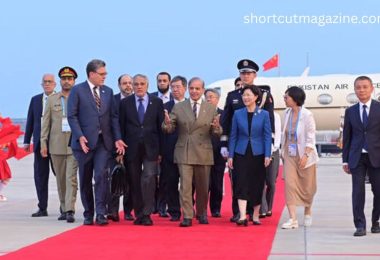
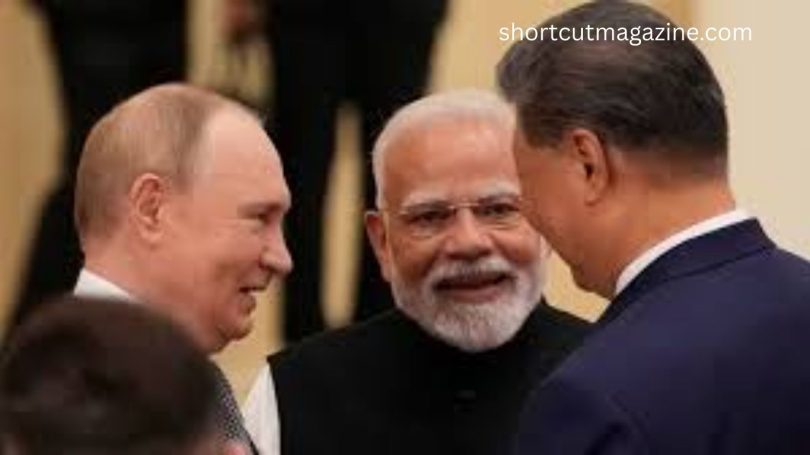

Tianjin, China — This weekend, Chinese President Xi Jinping is set to host an unprecedented gathering of world leaders in Tianjin, including autocrats, populists, and allies and rivals alike. The two-day summit of the Shanghai Cooperation Organization (SCO) is designed to position Beijing as a decisive global player and an alternative to Western-led institutions.
The summit brings together heads of state and delegations from Asia, the Middle East, and beyond, underscoring China’s growing ambition to reshape the global order. Leaders attending include Russian President Vladimir Putin, Indian Prime Minister Narendra Modi, and representatives from Iran, Pakistan, and other SCO member states. The gathering will coincide with a major military parade in Beijing, highlighting China’s military modernization and signaling its rising influence to the world.
Read More: Pakistan evacuates 500,000 people stranded by severe floods
A Showcase of Power and Diplomacy
Chinese officials are billing this SCO meeting as the largest in its history. Through diplomacy, ceremonial pageantry, and bilateral talks, Xi aims to present China as a stable, capable leader amid global uncertainty. The summit takes place against the backdrop of a volatile international environment, including the United States’ realignment of alliances and ongoing trade disputes under President Donald Trump.
The military parade in Beijing, scheduled shortly after the summit, will reinforce China’s strategic might. Leaders such as North Korea’s Kim Jong Un and Myanmar’s Min Aung Hlaing will join Putin and Russia-aligned European figures like Serbia’s Aleksandar Vučić and Slovakia’s Robert Fico. The combination of political and military displays reflects Beijing’s dual strategy of soft power diplomacy and hard power projection.
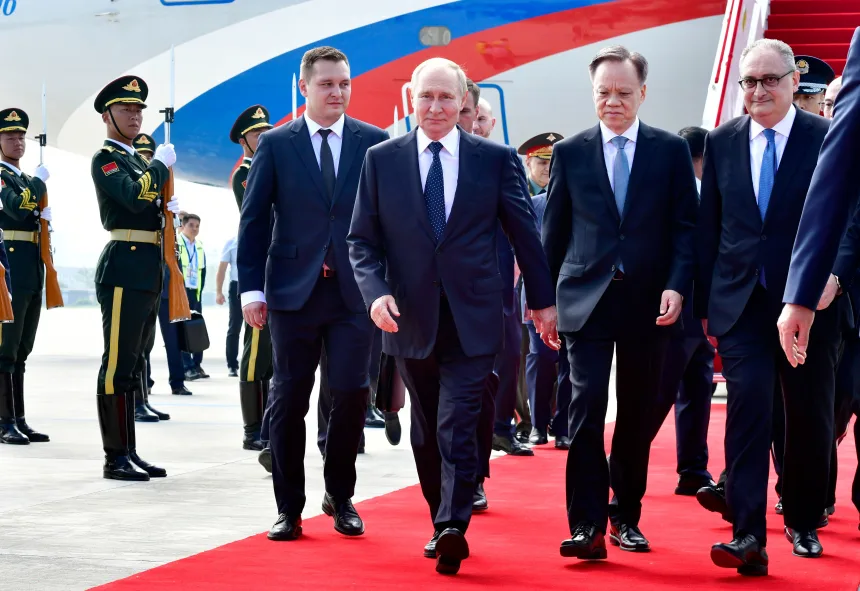
For Russia, the summit offers an important stage just weeks after Putin’s Alaska meeting with Trump. Despite growing international criticism over the war in Ukraine, Putin has embraced the China-Russia partnership as a “stabilizing force,” promoting a multipolar world order that challenges what he sees as U.S.-dominated global institutions.
The SCO’s Strategic Significance
Founded in 2001, the SCO initially included China, Russia, Kazakhstan, Kyrgyzstan, Tajikistan, and Uzbekistan to foster regional security cooperation. Since then, it has expanded to include India, Pakistan, Iran, and Belarus, with several partner and observer countries such as Turkey, Saudi Arabia, and Egypt attending. Collectively, SCO members govern nearly 40% of the world’s population and control vast energy reserves, making the organization a key geopolitical bloc.
SCO members conduct joint counter-terrorism exercises, intelligence-sharing, and regional development projects. Their stated aim is to establish a “just” international order, free from domination by a single superpower. Recent expansions and partnerships, including Iran and Belarus, have further positioned the group as a counterweight to Western influence.
Xi as Architect and Host
The summit highlights China’s role as both convenor and mediator, bringing together leaders with historical rivalries and divergent political systems. This display reinforces Xi’s message that China is capable of managing complex global relationships and translating competition into controlled interdependence.
“Beijing wants to signal that it is indispensable in Eurasia, capable of seating rivals at the same table and turning great-power competition into managed cooperation,” said Rabia Akhtar, director of the Centre for Security, Strategy and Policy Research at the University of Lahore.
Prime Minister Modi’s presence adds diplomatic weight. After skipping last year’s summit, Modi arrived in Tianjin amid cooling ties with Washington, reflecting India’s gradual rapprochement with China. This realignment could complicate U.S. efforts to position India as a counterbalance to China in Asia.
Global Attention and Symbolism
Tianjin’s streets have been transformed with banners in English, Russian, and Chinese, while authorities have restricted traffic to accommodate summit ceremonies. The city’s historical significance adds symbolic weight: a port once forced open by colonial powers and occupied by Japan during World War II, now hosting leaders from across the globe.
Several dignitaries, including Putin, Iranian President Masoud Pezeshkian, and Pakistani Prime Minister Shehbaz Sharif, are scheduled to attend Beijing’s military parade. The parade will celebrate both China’s growing military capabilities and its role in World War II, coinciding with the 80th anniversary of the war’s end.
Economic and Strategic Prospects
Beyond symbolism, observers are watching for tangible outcomes in trade, investment, and regional integration. While the SCO has yet to produce major economic initiatives, its members are exploring avenues for deeper coordination in energy, infrastructure, and finance.
However, analysts caution that internal rivalries and external conflicts may limit the organization’s effectiveness. “Without a clear mission and the ability to resolve internal disputes, the SCO risks remaining primarily a showcase for its leading members,” said Shen Dingli, a Shanghai-based foreign affairs analyst.
Controversies and Limitations
Despite its ambitions, the SCO has been criticized for its lack of practical influence on major conflicts. The organization did not mediate the brief India-Pakistan border clash earlier this year and has largely avoided commenting on the war in Ukraine. Nevertheless, it has condemned military strikes by the U.S. and Israel against Iran, reflecting its members’ shared interests in countering Western intervention.
Still, the summit underscores China and Russia’s intent to offer an alternative global order. By convening diverse leaders under one roof, Beijing is asserting its role as a global power capable of shaping regional security, economic collaboration, and geopolitical norms.
Frequently Asked Questions:
What is the significance of Xi Jinping hosting Putin and Modi?
Xi Jinping’s hosting of Russian President Vladimir Putin and Indian Prime Minister Narendra Modi highlights China’s growing influence in global politics. It positions Beijing as a mediator capable of convening rival nations and showcasing an alternative leadership model to Western powers.
Where and when did the summit take place?
The summit took place in Tianjin, China, over two days. It coincided with preparations for a major military parade in Beijing, demonstrating China’s rising diplomatic and military influence.
What is the Shanghai Cooperation Organization (SCO)?
The SCO is a regional security and economic organization formed in 2001, initially including China, Russia, and several Central Asian countries. Today, it includes India, Pakistan, Iran, and Belarus, along with partner and observer states. Its focus is regional security, counter-terrorism, and promoting multipolar global governance.
Why is the summit important for Russia?
The gathering gives Putin an international platform shortly after his Alaska meeting with Trump and amid global criticism over the war in Ukraine. It allows Russia to reinforce its strategic partnership with China and promote a multipolar world order.
How does Modi’s attendance impact India-China relations?
Modi’s presence reflects India’s efforts to ease tensions with China while navigating a shifting global landscape. His attendance signals potential cooperation despite past border disputes and could influence India’s relationship with the U.S. as a counterbalance to China.
Which other countries attended or observed the summit?
SCO member states include China, Russia, India, Pakistan, Iran, Kazakhstan, Kyrgyzstan, Tajikistan, Uzbekistan, and Belarus. Observer and partner countries, such as Turkey, Saudi Arabia, Egypt, and several Gulf states, also participated. UN Secretary-General Antonio Guterres attended as well.
What were the key messages of the summit?
The summit emphasized multipolarity, regional cooperation, and China’s role as a global mediator. It also highlighted China and Russia’s shared vision of a “just” international order, challenging U.S.-led global dominance.
Conclusion
The Tianjin summit underscores China’s growing role as a global power and mediator in an increasingly fragmented world. By hosting leaders like Vladimir Putin and Narendra Modi, Xi Jinping demonstrates Beijing’s ability to convene rival nations, manage complex diplomacy, and challenge U.S.-led global structures. While practical outcomes on trade or security remain uncertain, the summit solidifies China’s image as a strategic architect in Eurasia and signals a shift toward a more multipolar world order. The event marks a pivotal moment in international relations, with implications for alliances, regional stability, and the balance of power in the years ahead.