
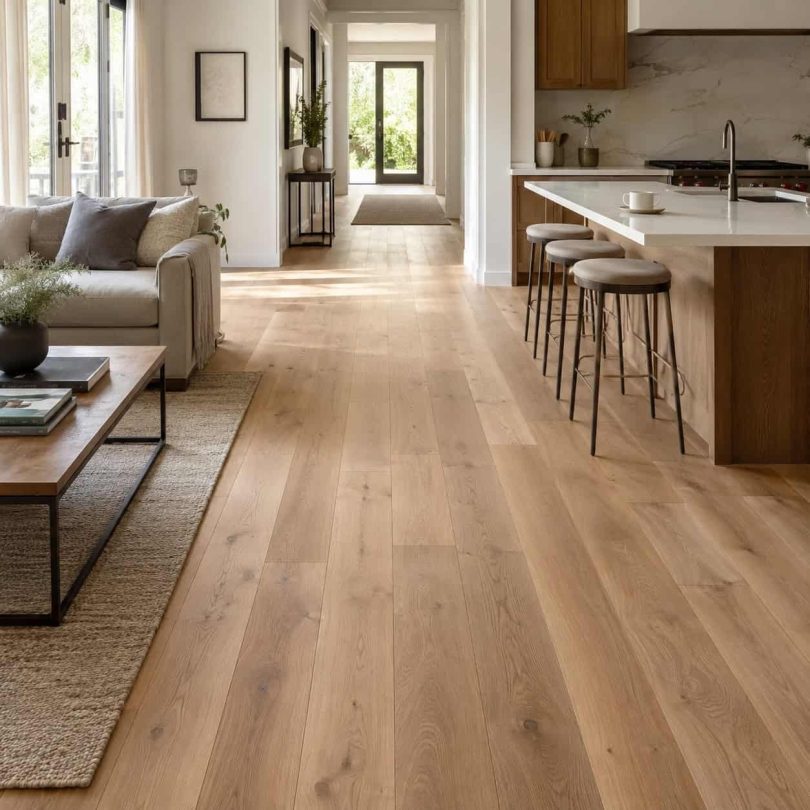

Commercial floors live a harder life than domestic ones. They take trolleys, heels, castor chairs, wet umbrellas and thousands of footsteps a week, and when they fail, the cost is not just the floor, it is the closed shop or the empty office while it is replaced. That is why Spc wood flooring has moved so quickly from homes into commercial spaces. Its rigid waterproof core, tough wear layer and click-together installation answer the three questions every facilities manager asks: how long will it last, how fast can it go down, and how easily can it be repaired?
Built for Footfall, Trolleys and Castor Chairs
The number that matters commercially is wear-layer thickness. Domestic floors often use 0.3 millimetres; commercial-grade SPC steps up to 0.5 or 0.7 millimetres of hardened, scratch-resistant coating over a core so dense it resists indentation from loaded shelving and chair castors. Unlike carpet tiles, it does not flatten or fray in traffic lanes, and unlike polished concrete it does not echo. Spilt coffee, tracked-in rain and cleaning chemicals wipe off without staining, which keeps reception areas and shop floors looking presentable through the day instead of deteriorating visibly by lunchtime.
Installation Without Closing the Business
Because the floor floats and clicks together, large areas can be covered overnight or across a weekend with no adhesive fumes, no curing time and no need to empty the building of stock or furniture for days. It can often be laid directly over existing hard floors that are sound and level, removing the cost and noise of ripping out the old surface. Phased installation is straightforward too: fit the sales floor this weekend, the stockroom next, and the offices after that. For landlords, the same speed turns a tired rental around between tenancies without a long void period.
A Note on Appearance and Brand
Customers judge a business in seconds, and floors fill much of what they see. A convincing wood effect warms a retail unit, softens a clinic and makes an office feel designed rather than assembled. Because ranges share colours across plank and herringbone formats, a brand can carry one look from the entrance through to the meeting rooms, keeping the identity consistent across a whole portfolio of sites.
Meeting the Practical Requirements
Commercial specifiers have checklists, and good products answer them. Fire performance, slip resistance ratings and acoustic figures are published for reputable ranges, and the attached underlay options help with impact sound between floors in converted buildings. In cafés, salons and clinics, the waterproof core of Spc wood flooring handles constant mopping and the occasional flood from a basin or machine without swelling at the joints, a failure mode that quietly destroys laminate in these settings within a couple of years. Always request the technical data sheet for the exact product and keep it with your compliance records.
Repair and Replacement Economics
Damage in commercial spaces is a matter of when, not if: a dropped tool, a dragged cabinet, a vandalised corner. With sheet flooring, one bad patch can mean replacing a whole room. With click planks, a fitter can unclick back to the damaged board, swap in a spare from the original batch and relock the floor, usually within the hour and without closing the premises. Sensible managers order a few extra packs at installation and store them flat on site, turning a potential crisis into a routine maintenance task that nobody outside the building ever notices.
Rental Properties and Houses in Multiple Occupation
Landlords sit between two pressures: tenants expect attractive homes, and every repair comes out of the yield. Wood-effect SPC gives a smart, neutral floor that photographs well for listings, survives pet clauses and student houses, and can be deep-cleaned between tenancies instead of replaced. In houses in multiple occupation, one continuous waterproof floor through hall, kitchen and bathroom simplifies cleaning contracts and removes carpet from the equation entirely. Because individual planks can be swapped, a single badly damaged room rarely means reflooring the whole property, which protects both the deposit discussion and the landlord's budget.
Choosing and Specifying the Right Product
Specify by wear layer first, then check the total plank thickness and the locking system's reputation, because commercial floors punish weak joints. Choose mid-tone, busy-grained designs that disguise dust and scuffs between cleans, and avoid very pale or very dark finishes in high-traffic entrances. Confirm the warranty covers commercial use, since some domestic warranties are voided in shops and offices. Finally, agree the maintenance routine with your cleaning contractor: no steam mops at full blast, no abrasive pads, just regular sweeping and damp mopping with a neutral cleaner, and the floor will hold its appearance for years.
The Commercial Bottom Line
Total cost of ownership is where SPC makes its case. The purchase price sits well below quality commercial vinyl installed by professionals or engineered timber, fitting is fast enough to avoid lost trading days, daily cleaning is cheap, and repairs are local and quick. Spread across a ten-year service life in a busy premises, few floor coverings compete. For offices, shops, clinics, cafés and rental portfolios that cannot afford downtime or delicate surfaces, it has become the default sensible answer: attractive enough for customers, tough enough for Mondays.