
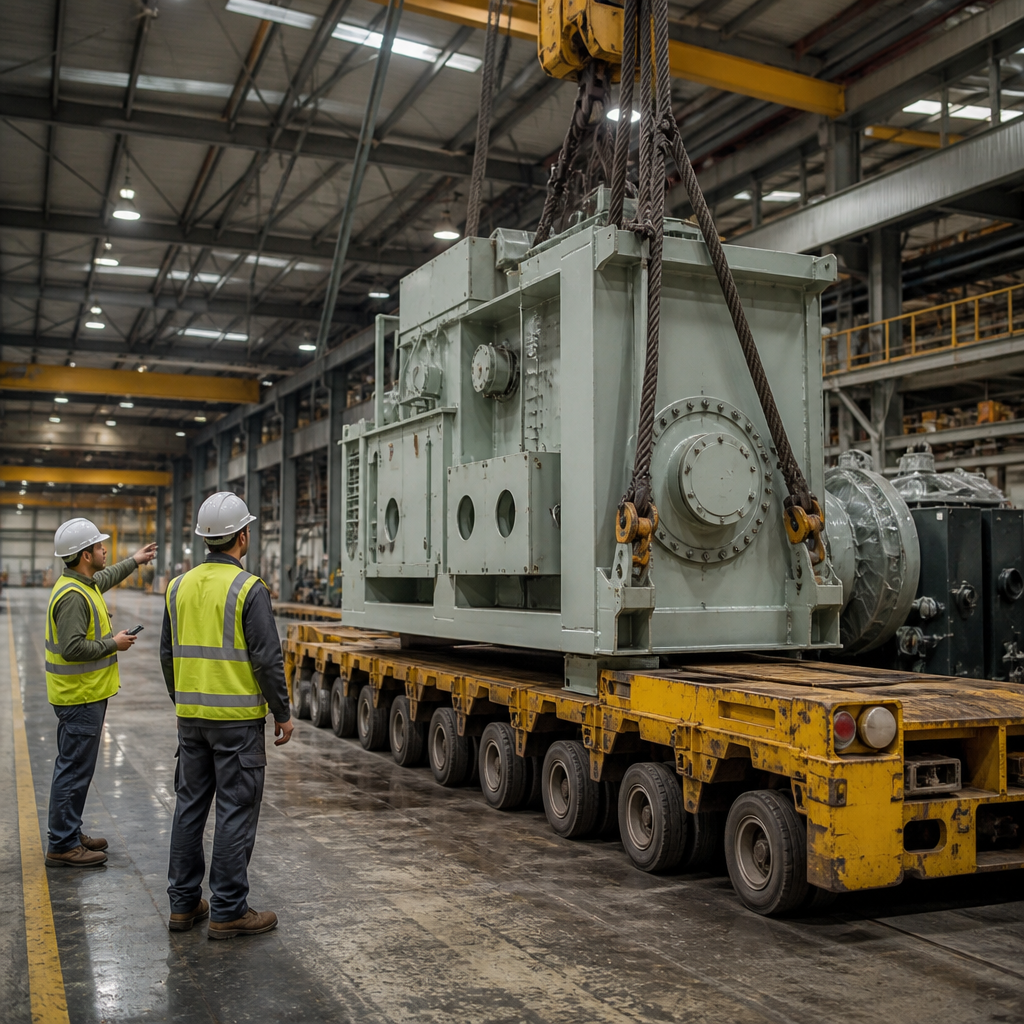
Relocating industrial equipment is not a task that tolerates improvisation. Whether a manufacturing facility is expanding, consolidating operations, or shifting production lines to a new site, the process of moving heavy machinery demands a level of precision, planning, and professional expertise that goes far beyond standard freight logistics. Businesses that underestimate this complexity often face costly downtime, equipment damage, and serious safety liabilities. Understanding what separates a competent industrial machinery mover from an unqualified one is the first step toward protecting your assets and your workforce.
The Unique Challenges of Moving Industrial Equipment
Industrial machinery presents a category of logistical challenges that conventional moving companies are simply not equipped to handle. CNC machines, hydraulic presses, industrial lathes, compressors, and assembly line components are not only extraordinarily heavy — often measured in tens of thousands of pounds — but they are also precision instruments calibrated to exacting tolerances. A single jolt during transit can misalign internal components, rendering a machine inoperable or requiring expensive recalibration.
Beyond the physical weight and fragility, there are structural considerations at both the origin and destination sites. Floor load ratings, ceiling clearances, doorway widths, and loading dock configurations all factor into how a piece of equipment can be safely extracted and reinstalled. Rigging specialists must assess each environment independently, designing a move plan that accounts for every physical constraint before a single piece of equipment is touched.
Why Standard Freight Logistics Falls Short
Many business owners make the mistake of assuming that any logistics provider with flatbed trucks and forklifts can handle an industrial machinery move. This assumption is dangerous. Standard freight operations are optimized for palletized goods, containerized cargo, and items that conform to predictable dimensions and weights. Industrial machinery, by contrast, is often irregularly shaped, top-heavy, and sensitive to vibration in ways that standard freight protocols do not address.
Specialized rigging equipment — including gantry cranes, hydraulic skates, air casters, and custom-engineered lifting frames — is required for many industrial moves. Operators must be trained not just in equipment operation but in the physics of load distribution and the specific handling requirements of different machine types. This is a discipline unto itself, and it demands dedicated professionals.
Key Criteria for Selecting the Right Industrial Machinery Mover
Choosing the right partner for an industrial machinery relocation is a decision that should be made with the same rigor applied to any major capital investment. Several factors distinguish truly qualified providers from those who merely claim the capability.
Licensing, Insurance, and Compliance
Any legitimate industrial machinery mover must carry appropriate licensing for the jurisdictions in which they operate, along with comprehensive liability insurance and workers’ compensation coverage. In states like California, where regulatory requirements are particularly stringent, verifying that a mover holds the correct contractor licenses and permits is non-negotiable. Businesses should request proof of insurance and confirm coverage limits before signing any contract.
Experience with Your Specific Equipment Type
Not all industrial machinery movers have experience across every equipment category. A company that excels at relocating printing presses may lack the expertise needed to safely move a multi-axis CNC machining center or a large-format injection molding machine. Always ask for documented experience with your specific type of equipment, and request references from clients in similar industries. A reputable mover will have no hesitation providing this information.
Site Assessment and Pre-Move Planning
Professional industrial movers conduct thorough site assessments before any work begins. This includes evaluating floor conditions, mapping out travel paths, identifying potential obstacles, and coordinating with facility managers to minimize operational disruption. A detailed move plan should be provided in writing, outlining each phase of the operation, the equipment to be used, and the safety protocols in place. If a mover skips this step or provides only a verbal overview, that is a significant red flag.
The Broader Logistics Context: Risk, Security, and Supply Chain Integrity
Industrial machinery relocation does not occur in a vacuum. It is part of a broader supply chain ecosystem that is increasingly subject to disruption from geopolitical, infrastructural, and security-related pressures. Businesses operating in sectors tied to defense, manufacturing, or critical infrastructure must be especially vigilant. Analysts studying vulnerabilities in U.S. military logistics networks have highlighted how even seemingly peripheral logistical decisions can have cascading consequences for operational readiness and national security. For private sector businesses, the lesson is analogous: every link in the logistics chain carries risk, and professional management of each link is essential.
This perspective reinforces why the selection of qualified, accountable logistics partners — including industrial machinery movers — is a strategic business decision, not merely an operational one. The cost of a failed or poorly executed machinery move extends well beyond repair bills. It includes lost production time, delayed project timelines, and potential harm to client relationships.
Measuring Success: Logistics Metrics That Matter
Savvy business owners increasingly apply data-driven thinking to their logistics decisions, including equipment relocations. Tracking metrics such as move completion time, equipment downtime during transition, damage incident rates, and cost-per-move provides a factual basis for evaluating provider performance and improving future planning. Understanding the essential logistics metrics every business owner should monitor is a foundational practice for any organization that depends on physical assets and supply chain efficiency.
Applying this metrics-based approach to industrial machinery moves means establishing clear performance benchmarks before the project begins, documenting outcomes, and using that data to refine vendor selection and move planning for future projects. It transforms what might otherwise be a one-time transactional event into a repeatable, optimizable process.
Bear Down Logistics: A Trusted Partner for Industrial Moves in Los Angeles
For businesses operating in the greater Los Angeles area, finding a qualified and experienced industrial machinery mover is both critical and, fortunately, achievable. Bear Down Logistics has built a strong reputation in the Southern California market for delivering safe, efficient, and professionally managed industrial equipment relocations. The company brings together certified rigging specialists, purpose-built equipment, and a meticulous planning process that addresses the full complexity of industrial moves — from initial site assessment through final reinstallation and equipment verification. Their team understands the regulatory environment in California and maintains the licensing and insurance standards that serious industrial clients require.
Selecting the Right Mover for Your Los Angeles Operation
When evaluating Industrial Machinery Movers in the Los Angeles region, businesses should prioritize providers who demonstrate transparent communication, documented experience, and a commitment to safety at every stage of the process. Bear Down Logistics exemplifies these qualities, making them a reliable choice for manufacturers, fabricators, and industrial operators throughout the region who need their equipment moved without compromise.
Conclusion: Precision Matters in Every Phase of Industrial Relocation
Moving industrial machinery is one of the highest-stakes logistical challenges a business can face. The consequences of choosing the wrong provider — or of treating the process as a routine freight shipment — can be severe and long-lasting. By applying rigorous selection criteria, demanding transparency and documentation, and partnering with specialists who bring genuine expertise to the work, businesses can protect their equipment, their people, and their operational continuity. In a competitive industrial landscape, that level of diligence is not optional — it is essential.