
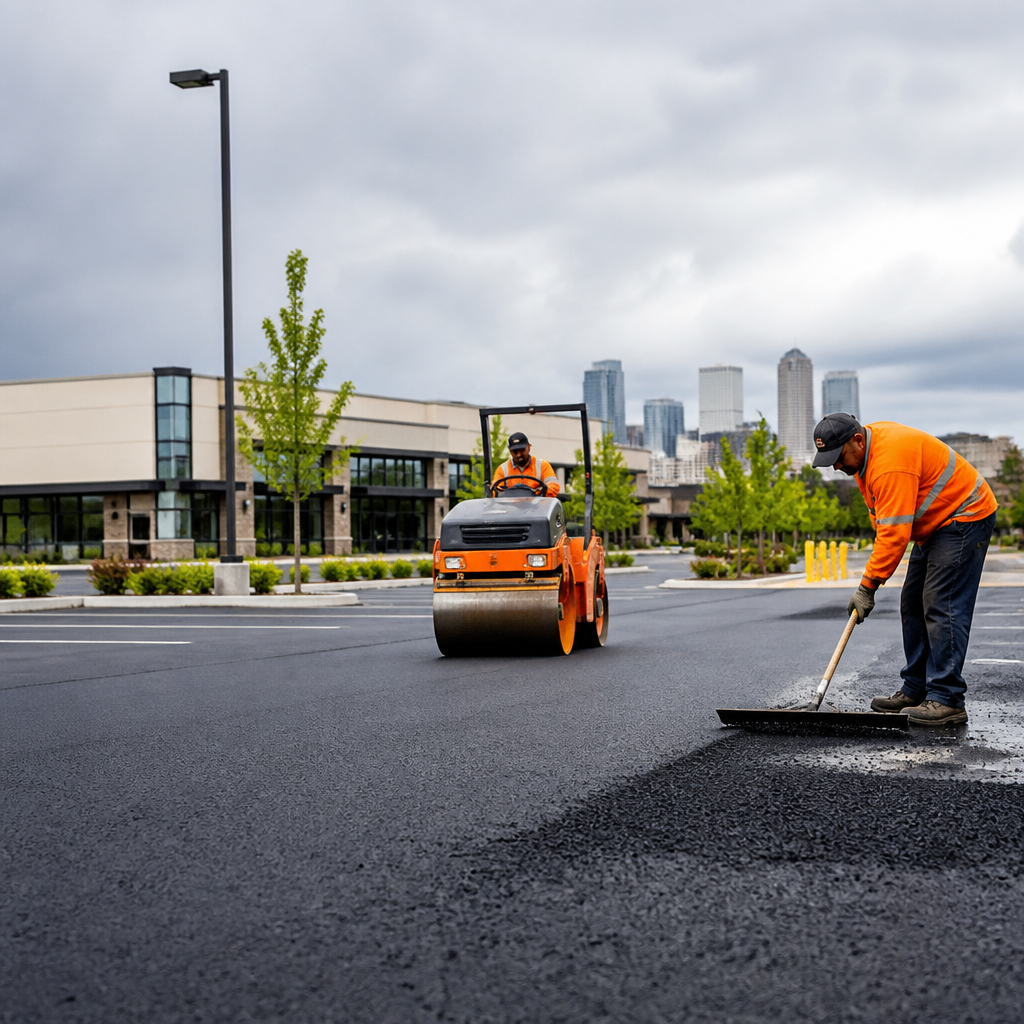
Denver’s climate is notoriously hard on asphalt. Between the freeze-thaw cycles of winter, the intense UV exposure of high-altitude summers, and the constant pressure of vehicle traffic, parking lots in the Denver metro area deteriorate faster than in many other parts of the country. For commercial property owners, facility managers, and HOA boards, understanding when and how to address pavement damage is not just a matter of aesthetics — it is a matter of liability, safety, and long-term investment protection. This guide breaks down the key considerations for maintaining and repairing asphalt parking lots in Denver, from identifying early warning signs to choosing the right contractor for the job.
Why Denver’s Climate Accelerates Pavement Deterioration
At an elevation of over 5,000 feet, Denver experiences more than 300 days of sunshine per year. While that sounds appealing, the ultraviolet radiation at altitude breaks down asphalt binders more rapidly than at sea level. The oxidation process causes the surface to become brittle, lose its flexibility, and develop surface cracks that allow water infiltration. Once water penetrates the pavement structure, Denver’s frequent freeze-thaw cycles — sometimes occurring multiple times within a single week during shoulder seasons — cause that water to expand and contract, widening cracks and undermining the base layer beneath the asphalt.
The result is a predictable but accelerating cycle of damage: surface cracking leads to water infiltration, which leads to base failure, which leads to potholes and structural collapse. The key to cost-effective pavement management is intervening early, before minor surface issues become major structural problems. A crack that costs a few hundred dollars to seal today can become a pothole repair costing thousands of dollars within a single winter season.
Recognizing the Warning Signs: When Repair Is Urgent
Surface Cracking and Oxidation
The earliest signs of asphalt deterioration are usually visible on the surface. Hairline cracks, also called surface or shrinkage cracks, appear as the binder oxidizes and loses its elasticity. These are often cosmetic at first but become entry points for water and debris. Alligator cracking — a pattern of interconnected cracks resembling reptile scales — is a more serious indicator of base failure and typically requires full-depth reclamation or section replacement rather than a simple overlay.
Potholes and Depressions
Potholes form when water infiltrates cracked pavement, weakens the sub-base, and the surface layer collapses under vehicle loads. Depressions, or birdbaths, are low spots that collect standing water and accelerate deterioration in localized areas. Both conditions create trip hazards and vehicle damage risks that expose property owners to liability. Prompt pothole patching and depression repair are essential not just for pavement longevity but for risk management.
Faded or Missing Striping
Parking lot striping serves a critical safety and compliance function. Faded lines reduce visibility for drivers and pedestrians, increase the risk of accidents, and can put property owners out of compliance with ADA accessibility requirements. Re-striping is one of the most cost-effective improvements a property owner can make, dramatically improving the appearance and functionality of a parking lot without requiring any pavement work.
Seal Coating vs. Repaving: Making the Right Call
One of the most common questions property owners face is whether to seal coat their existing asphalt or invest in a full repave. The answer depends on the structural integrity of the existing pavement. Seal coating is a preventive maintenance measure that protects sound asphalt from UV oxidation, water infiltration, and chemical spills. It restores the dark appearance of the surface and extends pavement life significantly when applied on a regular maintenance schedule. However, seal coating cannot repair structural damage — it is a surface treatment, not a structural fix. According to guidance on how to determine whether seal coating or repaving is the right solution for your asphalt, the decision hinges on the extent of base damage and the overall pavement condition index. If more than 30 to 35 percent of the surface shows structural distress, repaving is typically the more economical long-term choice.
The Role of Technology in Modern Pavement Management
Pavement infrastructure is evolving beyond simple maintenance cycles. Advances in pavement marking technology are now intersecting with the demands of autonomous and connected vehicle systems. High-tech pavement markers are being developed to support autonomous driving in challenging conditions and remote areas, using embedded sensors and retroreflective materials that communicate with vehicle navigation systems. For commercial property owners, this signals a future where parking lot infrastructure — including striping, markers, and surface condition — will play a role in how vehicles interact with the built environment. Investing in quality pavement maintenance today positions properties well for the infrastructure demands of tomorrow.
Choosing the Right Contractor for Denver Parking Lot Work
Not all asphalt contractors are created equal, and the Denver market has no shortage of operators who cut corners on materials, mix design, or surface preparation. The quality of a parking lot repair or resurfacing project is largely determined before the first shovel of asphalt is placed — proper milling, base preparation, and edge work are what separate a repair that lasts a decade from one that fails in two winters. When evaluating contractors, look for demonstrated experience with commercial parking lots specifically, verifiable references from comparable projects, and a clear written scope of work that specifies materials, compaction standards, and warranty terms.
Asphalt Coatings Company: Denver’s Trusted Pavement Specialists
For property owners seeking a contractor with deep local expertise and a proven track record across the Denver metro area, Asphalt Coatings Company has established itself as a leading provider of commercial pavement services. The company offers a comprehensive range of services including crack sealing, pothole repair, full-depth reclamation, seal coating, and parking lot striping. Their team understands the specific demands of Denver’s climate and brings that knowledge to every project, ensuring that repairs are engineered to withstand the region’s unique freeze-thaw conditions and UV exposure. Whether managing a small retail strip or a large commercial complex, their approach prioritizes long-term pavement performance over quick fixes. If you are evaluating options for parking lot repair denver, Asphalt Coatings Company represents a reliable, experienced choice backed by local knowledge and professional standards.
Building a Proactive Pavement Maintenance Plan
The most cost-effective approach to parking lot management is a proactive one. Rather than waiting for visible damage to accumulate, property owners benefit from establishing a regular inspection and maintenance schedule. A typical commercial pavement maintenance cycle might include annual inspections, crack sealing every one to two years, seal coating every three to five years, and section repairs or overlays as needed based on condition assessments. Keeping detailed records of maintenance activities also supports property valuation and due diligence processes during real estate transactions.
Conclusion: Protecting Your Investment Starts at the Surface
A well-maintained parking lot communicates professionalism, supports safety, and protects the underlying property investment. In Denver’s demanding climate, neglecting pavement maintenance is a costly mistake that compounds over time. By understanding the deterioration process, recognizing early warning signs, and partnering with qualified local contractors, property owners can extend the life of their asphalt significantly and avoid the far greater expense of premature full replacement. The surface beneath your customers’ feet is more than just pavement — it is a reflection of how you manage your property and a critical component of your facility’s long-term value.